
Most users who communicate through messaging apps often wonder, “Is messenger safe?” Well, messengers are no less than a godsend in this digital age. However, users are right to question the safety they provide because data is monitored and tracked online.
Different messaging applications employ end-to-end encryption to tackle such issues to ensure that only the sender and recipient of a message or call can see or hear its content.
Even governmental and law enforcement agencies cannot access many of the most popular messaging apps because of their heavy encryption protection.
If you want to protect yourself, use programs that provide all the features required for secure communications.
Why Do Messages Need Encryption?
We frequently hear about celebrity scandals because someone leaked their messages, so we are certain that you would not want this to happen to your messages. Therefore, it is advised that you use a secure, fully encrypted messaging app.
End-to-end encryption for user-to-user text messaging is provided by encrypted messaging, also referred to as secure messaging.
Encrypted text messaging prevents snoopers from listening in on your conversations. Since it comes pre-installed on iOS and macOS, you’re probably already familiar with the Messages app.
We’ve written before about how important it is to take care of your data protection. The Messages app uses end-to-end encryption to shield users’ messages from prying eyes.
Which Messengers are the Most Popular With Users?
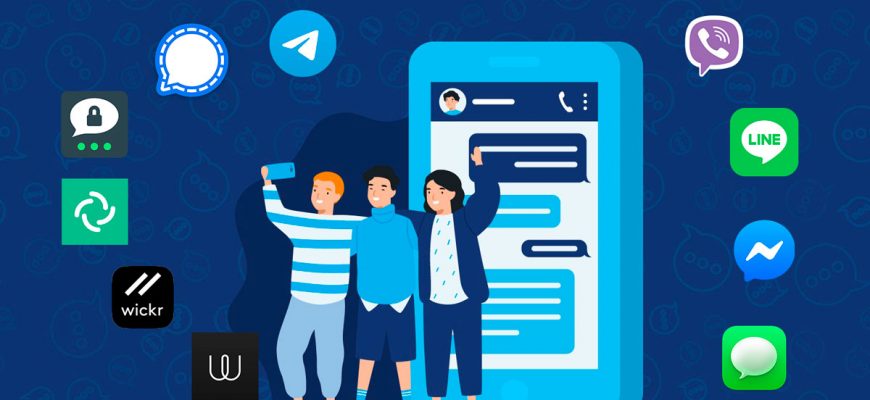
The most popular messaging apps are WhatsApp, Facebook Messenger, Viber, and Telegram. However, Signal is growing in popularity because it provides more security features than other messaging apps.
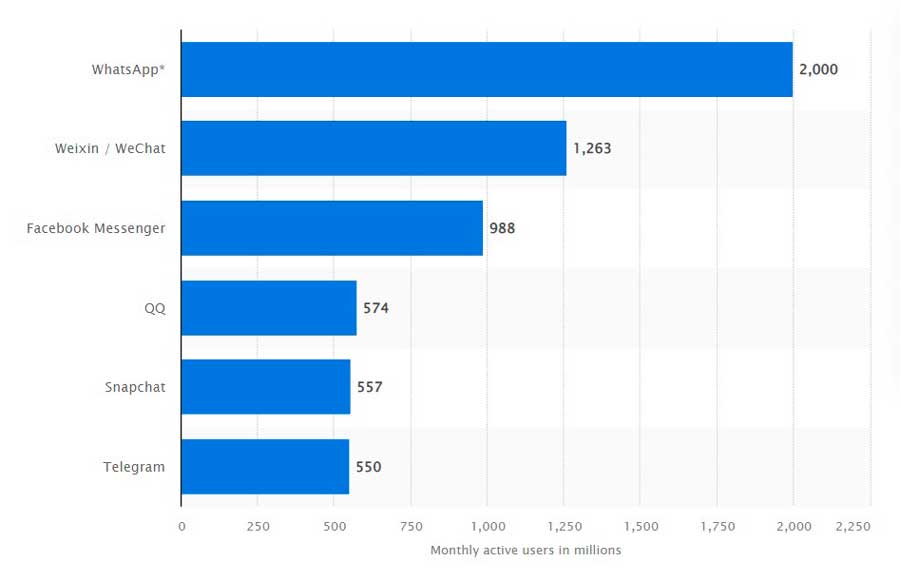
WhatsApp is the most popular messaging app for users because it is easy to use and has a wide range of features.
Facebook Messenger is also popular because it is integrated with Facebook, which most people use to communicate online. Viber and Telegram are also popular because they offer privacy features that other messaging apps do not provide.
Here are a few of the best and most popular messenger-safe apps;
Signal
Among the most secure social media messaging apps. The signal is used by millions to communicate quickly, cost-free, and with encryption.
The signal is a cross-platform encrypted communications service focusing on end-to-end encrypted phone calls and messaging without any commercials or secret surveillance techniques.
But a recently added feature that allows users to recover certain data, such as contacts, profile information, settings, and locked users, has led some high-profile security experts to criticize the app’s developers and threaten to stop using it.
Signal will have your data on servers owned by the company, protected by a PIN.
Users can select different disappearing message durations for each conversation saved in their chat history, which adds a layer of security.

Features
[su_row][su_column size=”1/2″ center=”no” class=””]

Both SMS and MMS are free[/su_column]
[su_column size=”1/2″ center=”no” class=””]

Encryption-protected stickers[/su_column][/su_row]
Wickr Me
Wickr Me is yet another fantastic iOS and Android app for encrypted chat. Wickr users can send each other private texts, images, videos, and voice chats.
These reliable features are available in this personal messaging program, which is also free and ad-free.
All conversations and media files on your device are completely deleted by the program’s “Shredder” feature.
Features
- End-to-end security
- Screenshot reminder
Wire
Your conversations, images, and data are protected by one of the few programs, Wire, which automatically employs end-to-end encryption.
It is completely open source, so anyone with access to its source code on GitHub can review, check out, and enhance it.
No usage or statistical data are made available to third parties by Wire.
Features
- Conversations are all timed
- Simple file transfer
- Supported operating systems include Windows, macOS, Linux, iOS, and Android
Threema
Threema app is regarded as among the most dependable open-source, encrypted messaging applications for mobile and web applications.
Due to Threema’s open-source nature, users can check the encryption without giving their email or phone number.
Threema’s server permanently deletes messages after they are delivered to their recipients.
Features
- Ability to communicate secretly
- Contacts are evaluated using QR codes
- Using password protection will allow you to hide private conversations
Telegram
It’s well known that Telegram will never give a third-party access to your data.
Its distinctive network of data centers is renowned for linking people worldwide.
The messages vanish instantly after a user chooses the “secrets conversations” option, and all connected devices self-destruct.

Telegram allows you to sync your chats across multiple devices simultaneously.
Features
- APIs and protocols are available for free
- Messages are deleted after a user-specified time
- Supported platforms include Mac, Linux, Windows, iOS, and Android
Element & Riot
Element, formerly known as Riot or Vector, is an end-to-end encrypted, matrix-based collaboration and messaging app. Its decentralized architecture, which permits on-premises deployment or uses with any cloud provider, provides digital sovereignty.
It’s a bit like Signal and Slack mixed together, with additional security and privacy settings.
You can use Element and the Matrix protocol to communicate with other chat platforms, including Slack, SMS, Signal, Telegram, Facebook Messenger, Google Hangouts, Skype, Discord, and even iMessage, among others, although you’ll need some programming knowledge and your own server to set up these integrations.
Features
- File Sharing
- Mobile & Web Application
- Search Bar
What messengers and messaging practices to avoid
Now you know the best messengers, it’s time to talk about which messengers are better not to mess with.
As practice shows, not all messengers are conscientious in protecting their users.
WhatsApp, which has 2,000 million active users each month, comes in third place among mobile messaging services in terms of security.
But Whatsapp has repeatedly shown itself to be a messenger with a reduced level of security.
More than a thousand users have abandoned it because of known cases of leaks of information from personal correspondence.
We wrote about 3 ways to spy on WhatsApp contacts.
Recent data reveals that WhatsApp sends more than 1 billion messages daily. It is simple to use as long as the user signs in with his phone number.
The manager has its pluses in protection like end-to-end encryption and strict algorithms. However, it is not difficult to bypass them.
Features
- Two-Step Authentication
- If the intended recipient does not view your message within 30 days, the WhatsApp server will delete it.
Viber
Viber provides a wide range of calling and messaging options, along with infinite ways to express yourself via stickers, emoticons, and GIFs, among other things.
Viber sets itself apart by assigning each individual chat a unique color based on the level of encryption it currently possesses. It is more than just a messaging service.
Features
- High-definition video calling
- Emoticons, GIFs, and stickers are available
Facebook Messenger
Despite the billions of users who use Facebook and its messaging services, few people are aware that Facebook’s app offers end-to-end encryption.
The powerhouse of social media is still compiling information on users, such as who they text and how frequently they use the app.
Not to mention, in 2018, Facebook made headlines for significant data leaks.
Features
- Encryption can only be used when users are communicating privately
- Another notable feature is the ability for users to select the time at which self-destructing messages will occur
iMessage
Since end-to-end encryption between users has always been a top priority for iMessage, you can consider yourself fortunate if you use an iPhone.
The users of this platform for encrypted messaging can also control how many times and for how long the recipient can view a message.
Features
- It is possible to block and unblock phone numbers
- GIFs, Memojis, and animations can change the message’s personality and profile
- iCloud for iMessage backup
Skype
Skype is one of the best VoIP alternatives today and one of the most widely used online communication tools. Skype was originally developed as a distributed system that transmits messages directly between the devices of the application’s end users.
Although Skype today no longer uses the distributed structure in its original form, it uses seven encryption algorithms, so even occasional reports of breaking one or the other of them are no reason to consider Skype an insecure means of communication.

It also has encryption and authentication features and interfaces for many other third-party apps.
Features
- Dialer Verification
- Utilizing messaging apps
- Both individual and group video calls over Skype
The best messenger safe with encryption
The results of your vote on the reliability and safety of messengers.
Final ranking table
If this list doesn’t tickle your fancy, these next few mentions might be just what you are looking for.
[su_row]
[su_column size=”1/3″ center=”no” class=””]
Silence is a well-known app that offers end-to-end encryption for all communications.[/su_column]
[su_column size=”1/3″ center=”no” class=””]
Additionally, Line offers complete message encryption and security. [/su_column]
[su_column size=”1/3″ center=”no” class=””]

Status is also a more recent rival in the market for the safest texting services.[/su_column]
[/su_row]
You can access Ethereum-based applications like EtherChat using this open-source tool, which also functions as a private chat and includes a Web3 browser and a decentralized cryptocurrency wallet.
On the other hand, total security was the intention behind the development of the Dust program. Previously, the program was known as Cyber-Dust.
Because Dust does not store interactions indefinitely, you can configure your conversations to be deleted as soon as the recipient reads them.
Conclusion
Even though all of the more conventional messaging services have developed over time, none can match the increased security and peace of mind that come with using some of the best encrypted messaging apps.
An encrypted messaging app can prevent your conversations from being overheard, whether you’re sending private or sensitive information about yourself or others.
If you start using any of these apps, rest assured you will never have to question, “is messenger safe to use?”.